









Italy
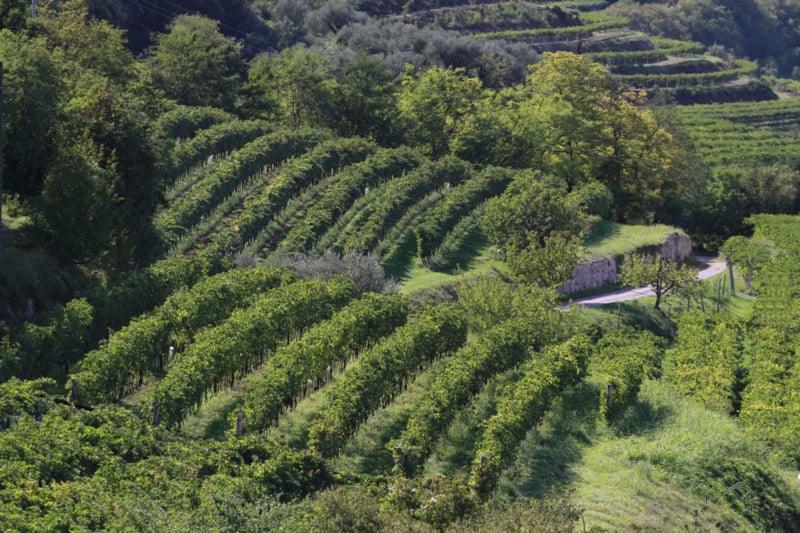
Italy is one of the oldest wine-producing countries. It is also the largest wine producer in the world and ranks number one as a wine exporter, sometimes alternated with France. The country is planted from north to south with exceptional grape varieties. Many of these are found almost exclusively in Italy, such as Nebbiolo, Sangiovese, Albana, Trebbiano, Verdicchio, and Vernaccia.
In viticulture, the emphasis is on using these indigenous varieties. However, Italian wine producers also work with well-known international varieties, such as Cabernet Sauvignon, Pinot Nero (Pinot Noir), Merlot, Chardonnay, and Sauvignon. This diversity and the many microclimates make Italy an extraordinary wine country with excellent, varied wines.
Italy lies between the 37th and 47th parallels. Mountains define the landscape: the Alps in the northwest and the Dolomites in the northeast. Near Genoa, the Alps transition into the Apennines, which traverse Italy roughly from north to south, all the way to the toe of the boot. If you want to go from west (the coast along the Tyrrhenian Sea) to east (the Adriatic coast), you always have to cross the Apennines. The landscape of the two large islands, Sardegna (Sardinia) and Sicilia (Sicily), also partly consists of mountains.
Also discover