Article: Which wine with game? From venison and roe deer to hare and pheasant
Which wine with game? From venison and roe deer to hare and pheasant
What wine do you drink with game? The ultimate guide for game season
Game season is open! As soon as the leaves fall and the temperatures drop, we prepare ourselves for the richest and fullest flavors of the year. Game dishes call for careful combinations: the characteristic, earthy taste of the meat, combined with rich sauces of red wine, blueberries or spices, calls for a wine that enhances the dish instead of overpowering it.
But which wine do you choose for which type of game? From refined poultry to robust wild boar: this is our guide for the perfect combination at the table.
The Golden Rule: Light flavors with light game, powerful flavors with coarse game
When considering the combination of wine and game, we look at two important factors: the intensity of the meat and the preparation method/sauce. A delicate duck breast calls for a completely different wine than a wild boar stew that has been simmering for hours.
1. Game Birds & Lighter Game (Duck, Pheasant, Pigeon & Rabbit)
Lighter game and poultry have a refined taste and are less pronouncedly earthy. The wines for this should be elegant, with fresh acidity and a refined fruit structure.
-
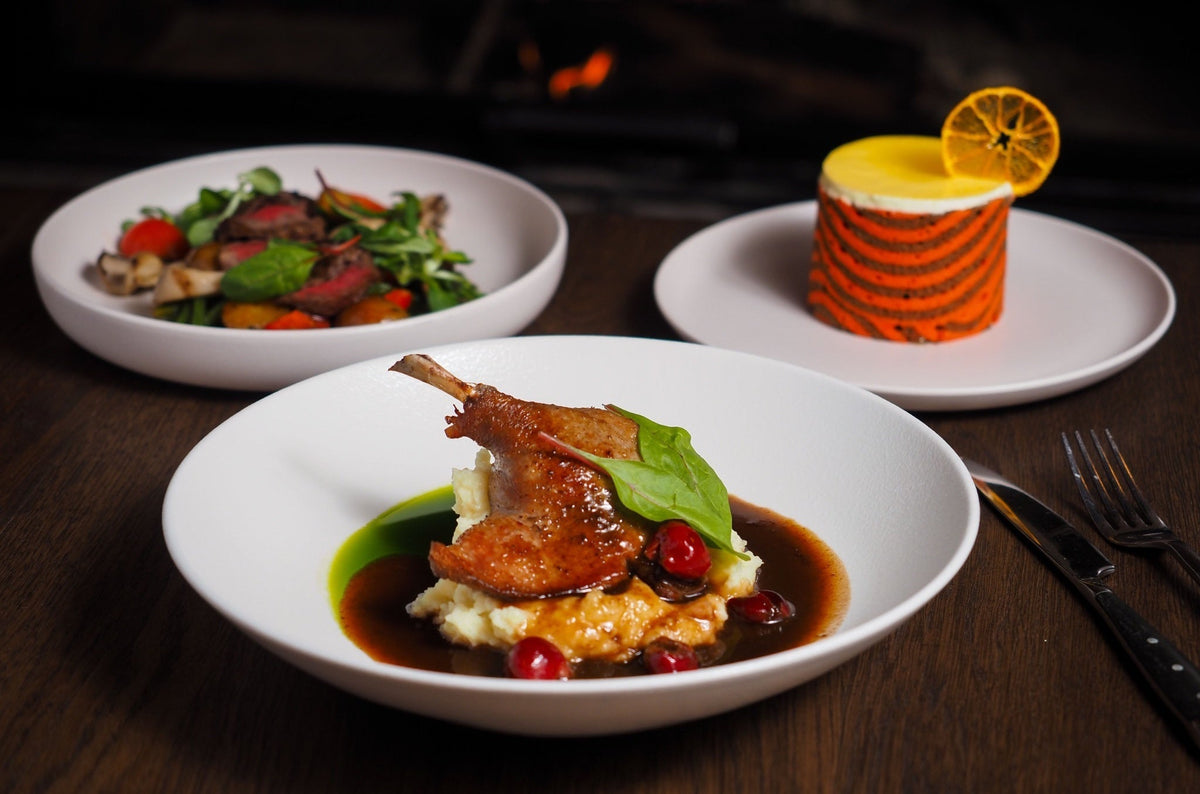
Duck breast: Duck contains a bit more fat and has a distinctive taste. Choose a red wine with fresh acidity to cut through the fat, combined with ripe red fruit.
-
Wine advice: Pinot Noir from Burgundy or a Pinot Noir from New Zealand, or an elegant Nerello Mascalese from Etna.
-
-
Pheasant & Rabbit: This meat is lean and subtle. Too heavy tannins quickly overpower the dish.
-
Wine advice: A ripe Marzemino,, a fresh Barbera d'Asti or an elegant Chianti Classico.
-
2. Hare & Venison (Refined & Lean Structure)
Venison steak and hare saddle are extremely tender, lean and have a very pure, earthy game flavor. They are often served with sauces based on cranberry, red berries or red wine.
-
The flavor profile: Look for a wine with ripe dark fruit, an earthy note (such as forest floor or leather) and supple,ripe tannins.
-
Wine advice:
-
A classic Bordeaux (Saint-Emillion) or a riper Syrah/Shiraz from the northern Rhône (such as Crozes-Hermitage).
-
Prefer Italy? Choose an aged Nero di Troia or a spicy Colorino blend from Tuscany.
-
3. Coarse Game & Stews (Wild Boar & Beef Stew)
Wild boar, game stews and goulash are the heavyweights of winter cuisine. The meat is firm, powerful in flavor and is often slowly cooked for hours in spicy sauces with cloves, bay leaves and juniper berries.
-
The flavor profile: Here you need 'powerhouse wines'. Powerful, full-bodied red wines with plenty of structure, ripe tannins and notes of spices, tobacco and dark fruit.
-
Wine advice:
-
A robust Barolo or Barbaresco (Nebbiolo).
-
A full-bodied Châteauneuf-du-Pape or giant from Languedoc/Roussillon based on Grenache and Mourvèdre or a Gigondas from the southern Rhône.
-
A powerful Amarone della Valpolicella for those who enjoy a rich, almost velvety finish.
-
Three tips for the perfect combination
-
Pay attention to the sauce: Are you serving a sweeter sauce (such as cranberry, cassis or fig)? Then choose a wine that is also ripe and fruity. A too tight, dry wine can taste very sour next to a sweet sauce.
-
Oak aging is a plus: Wines that have undergone aging in oak barrels, develop aromas of vanilla, cedar, toast and spices. This blends seamlessly with the grilled and roasted notes of the meat.
-
Serving temperature: Do not serve powerful red game wines too warm (preferably around 16-18°C). If a wine is served too warm, the alcohol dominates and the refined aromas of forest floor and spices are lost.
Would you like personalized advice for your specific Christmas or game menu? Feel free to ask, we are happy to help you think it through!
The sauce plays a role
Are you torn between two bottles? Then first look at what goes next to and over the meat. Mushrooms and truffle often pair beautifully with earthy, aged red wines. A peppery jus calls for spiciness, for example from Syrah. With cream and butter, a full-bodied white wine may actually be a better choice.
The side dishes also count. Sweet pumpkin, caramelized vegetables and cranberry compote change the flavor balance. It is better to serve a sweet compote in moderation if you are pouring a dry red wine.
Serving wine with game: give the bottle some attention
It is better to serve red wine with game slightly too cool than too warm. For many elegant red wines, around 14 to 16 °C is pleasant; fuller red wines often come into their own around 16 to 18 °C. Full-bodied white wine can generally be served a bit less cold than a fresh aperitif wine, for example around 10 to 12 °C.
A young, sturdy red wine can perk up with some air. Taste first and see if decanting is necessary. With an older wine, caution is advisable, because it can change more quickly after opening.
Our tip: start with your dish, not the heaviest bottle
The best wine with game is not necessarily the most powerful wine. With roe deer and finer game birds, an elegant style often does better. With hare pepper and a rich game stew, the wine may actually have more power and spiciness.
Are you looking for a suitable bottle for your game dish? Tell us which meat you are preparing, which sauce you are making and what you are serving with it. At Vechtstreek Wijnen, we are happy to help you think through a beautiful combination.