What actually are wood-aged wines?
What exactly are oak-aged wines? The great oak-aging myth
If you read words like Barrique, Crianza, Reserva or simply 'oak aged' on a wine label, you know one thing for sure:the wine has spent time in a wooden barrel. But what exactly does such a wooden barrel do to the taste? And does oak aging automatically make a wine 'better'?
The short answer: oak aging changes the texture, adds complex aromas and makes the wine softer. But as with everything in the wine world, the secret lies in the nuance.
What happens in the wooden barrel?
Oak works on the wine in two ways:
-
Oxygen (Micro-oxygenation): Wood is a porous material. It lets tiny amounts of oxygen through. This process gradually softens the often stubborn, angular tannins in red wine (such as in a young Sangiovese or Aglianico) and makes it velvety smooth.
-
Flavor release: The oak wood releases flavors into the wine. Depending on the origin of the wood and the way the inside of the barrel was charred (toast), very specific aromas are created.
What does oak aging taste like?
You can recognize oak aging not only by the taste, but also by the mouthfeel:
-
In red wine: Think of warm, ripe aromas such as vanilla, coconut, tobacco, cedar, spices (such as cloves and cinnamon), espresso and pure chocolate.
-
In white wine: Think of a creamier, fuller mouthfeel with notes of toasted butter, toast, vanilla, roasted almonds and caramel (think of a classic rich Chardonnay).
French versus American oak
Not every barrel is the same. The two most popular types of wood give a completely different character:
-
French oak: Has a very fine structure and gives subtle, elegant notes of subtle spices, cedar and light toast.
-
American oak: Is coarser in structure and gives flavor much faster and more exuberantly, especially very clear notes of vanilla, coconut and sweet spices (very typical for classic Riojas made from the Tempranillo grape).
The Myth: Is oak-aged always better?
Certainly not. Oak aging is like salt and pepper in the kitchen: it should enhance the ingredient (the grape), not overpower it.
A light, aromatic grape such as Scheurebe, Verdeca or Friulano is precisely what you want to taste because of its fresh fruit and uplifting acidity. If you put that on new oak wood, you will only taste wood and lose the unique grape character. That is why those wines are vinified in stainless steel (SS) to keep the fruit pure and thirst-quenching.
Which styles suit you?
-
Are you looking for powerful, warm and complex? Choose an oak-aged red wine such as a Tempranillo Crianza/Reserva or an oak-aged Aglianico.
-
Are you looking for fresh, tight and fruity? Choose stainless steel vinified wines such as Refosco dal Peduncolo Rosso or a mineral Xarel·lo.
Which grape varieties are suitable for oak aging (and which are not)?
Not every grape lends itself to an adventure in oak barrels. To be able to withstand oak aging, a grape needs to have enough body, structure, acidity or tannins on its own. If that base is too thin, the oak wood will simply blow away the subtle fruit flavors.
-
Grapes that shine with oak aging
These varieties have enough concentration, firm tannins or rich acidity that blend beautifully with the aromas of oak wood:
Red grape varieties:
-
Tempranillo: The undisputed king of oak aging in Spain (think Rioja and Ribera del Duero). The grape absorbs oak notes like a sponge and develops beautiful aromas of vanilla, cedar wood, tobacco and leather.
-
Aglianico: Because of its powerful tannins and high natural acidity, this grape needs time and oak aging to smooth out the sharp edges and transform into a velvety, volcanic icon wine.
-
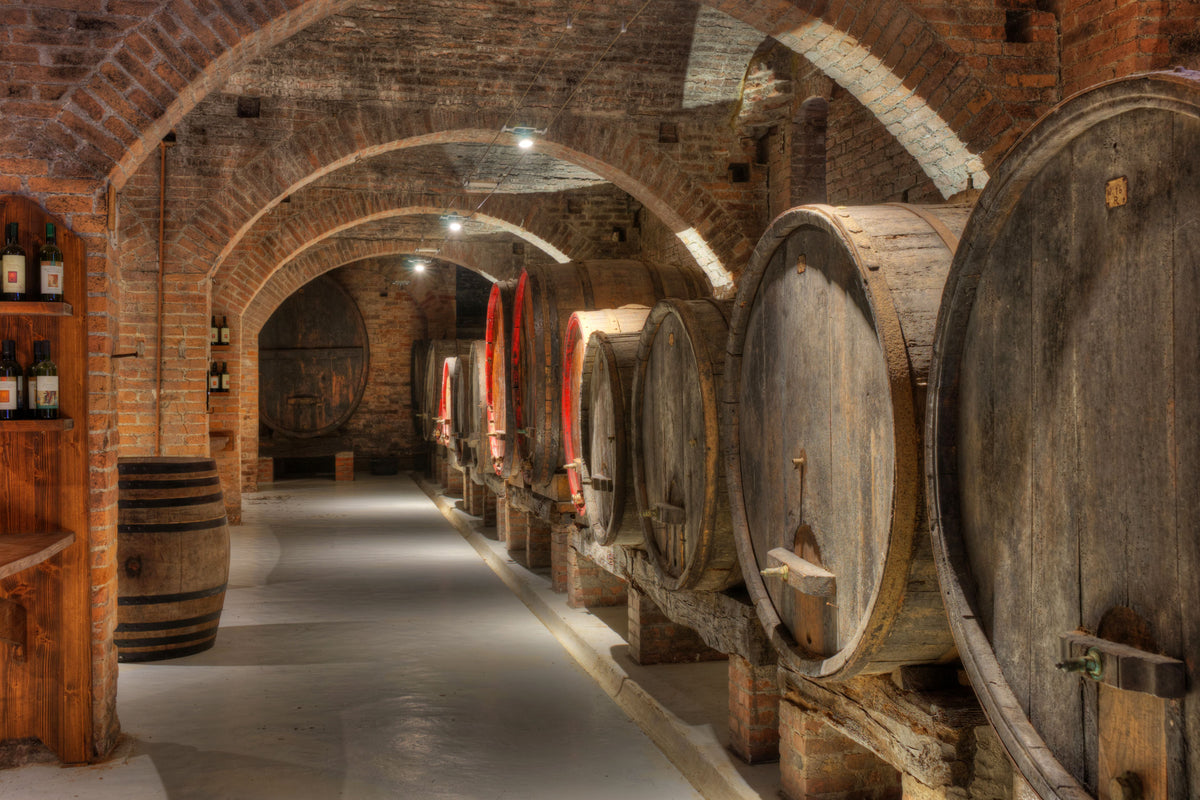
Sangiovese: Especially in the form of Brunello di Montalcino or Chianti Classico Riserva, the combination of oak wood (often large traditional barrels, botti) and high acidity provides monumental aging potential.
-
Touriga Nacional & Touriga Francesa: These Portuguese heavyweights have the firm structure and rich fruit concentration that oak aging effortlessly carries, both in dry red Douro wines and in rich Port.
White grape varieties:
-
Chardonnay: The best-known white candidate for oak. Develops a creamy, luscious texture with notes of brioche, toasted butter and hazelnut.
-
Xarel·lo: One of the rare Spanish white grapes with enough fleshy structure and skin resilience to age in wooden barrels (or clay amphorae) without losing its unique fennel and mineral character.
-
Grapes you preferably drink WITHOUT oak (Stainless Steel)
These varieties owe their charm to their captivating freshness, powdery fruit and subtle floral notes. Oak aging would be a waste, because it overpowers these delicate aromas.
White grape varieties:
-
Scheurebe: Famous for its powdery, tropical aromatics (passion fruit, grapefruit, cassis). Stainless steel proves here to be the best servant to keep the delicate Riesling-like acidity and fruit pure.
-
Verdeca: The fresh pearl from Puglia must have it from its crisp citrus fruit, floral nuances and salty mineral finish. Oak would only take away this thirst-quenching freshness.
-
Colombard & Loureiro: Both excel in pronounced aromas of green apple, lime and blossom. They should go into the bottle tight, refreshing and without oak influence.
Red grape varieties:
-
Refosco dal Peduncolo Rosso: Although Refosco sometimes gets a very light oak touch, its typical profile of dark cherry fruit, wildflowers, alpine freshness and tight acidity is best brought to its full rights with minimal to no oak influence.
-
Frappato & Schiava: Light, fruit-driven red grapes that should be drunk pure on the red fruit (strawberries, raspberries), preferably lightly chilled.
Conclusion: Trust the grape and your taste
Oak aging is therefore not a stamp for 'better' quality, but a conscious style choice by the winemaker to enhance the natural properties of a grape. Whether you succumb to the rich, warm vanilla notes of an oak-aged Tempranillo or rather bloom at the razor-sharp, mineral freshness of a stainless steel vinified Verdeca or Riesling: it all comes down to balance.
So do not let yourself be blinded in the store or online by terms like 'oak aged', but look at the grape, the character of the winery and especially what you feel like at that moment. Try, compare and discover which style best suits your taste and dish!