Article: How do you taste wine?
How do you taste wine?
How to taste wine? This is how you discover what's in your glass
Tasting wine sometimes sounds more complicated than it is. You hear wine lovers talk about aromas of cherries, citrus, violets, herbs, or even wet stones. But do you need to be able to recognize all of that?
Absolutely not.
Wine tasting is not an exam, and there is no right or wrong answer. The most important thing is to discover what you like. With a few simple steps, you can get much more out of a glass of wine just by looking, smelling, and tasting.
Grab a bottle and join in.
1. First, look at the wine
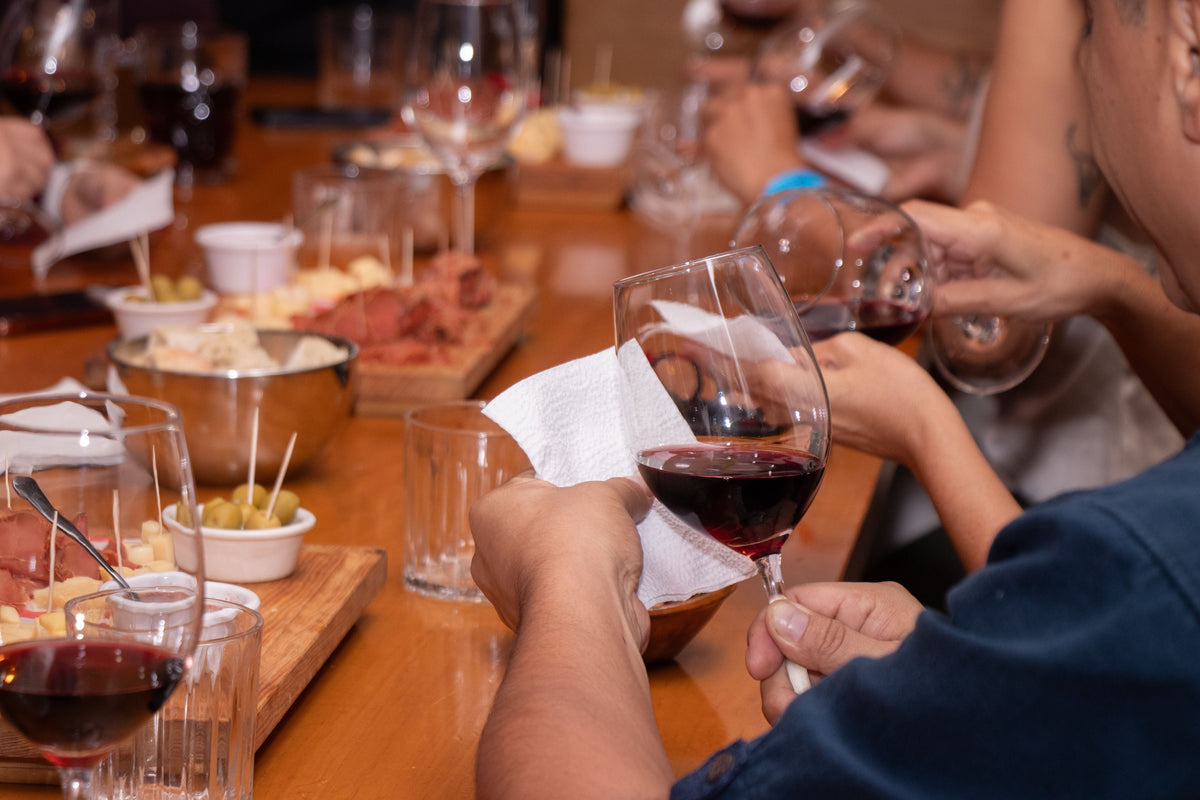
Pour the wine into a clear glass and look at it before taking a sip.
Pay attention to the color and clarity.
For example, a white wine can be almost colorless, light yellow, or even golden. Red wine can range from light ruby red to deep purple. Rosé can be anything from very pale salmon pink to intense pink.
The color can give a small indication of the wine's style and age, but don't expect a complete tasting report from it right away.
Looking is primarily a good way to calmly begin the tasting process.
2. Smell the wine
This is perhaps the most important step.
Bring the glass to your nose and first smell without moving the glass. What do you smell?
Then gently swirl the glass. This releases more aromas.
Don't immediately think:
"I need to smell if this smells like blackcurrants with a hint of graphite."
Start much simpler:
Does it smell fruity? Fresh? Spicy? Floral? Woody?
For white wine, you might recognize citrus, apple, pear, or tropical fruit. For red wine, cherries, berries, plums, or herbs often come to the fore.
And sometimes you smell something that makes you think: what does this remind me of?
That's what's interesting.
3. Take a small sip
Now comes the most fun part.
Take a small sip and let the wine move around your mouth.
Pay attention to a few things:
Is the wine fresh?
That's mainly due to the acidity in the wine. A fresh wine often gives a lively, somewhat tingling sensation and cleanses your palate, so to speak.
Think, for example, of lemon or green apple.
Is the wine dry or sweet?
A dry wine contains little residual sugar. This doesn't mean it can't have a fruity taste.
A Sauvignon Blanc, for example, can smell abundantly of ripe fruit and still be completely dry.
Is the wine light or full-bodied?
Some wines feel light and elegant, others are fuller and more powerful.
We often call this the mouthfeel or the body of the wine.
A simple comparison: think of the difference between skim milk and whole milk. It's not exactly the same, but it helps to understand the difference.
4. For red wine, pay attention to the tannins
For red wine, you often encounter the word tannins.
Tannins are natural substances that come mainly from grape skins, seeds, and sometimes wood. They give structure to red wine and can cause a somewhat dry or astringent sensation in your mouth.
Take a sip of a robust red wine and pay attention to your gums and the inside of your cheeks.
Does your mouth feel a bit dry?
Then you're probably tasting tannins.
Young Cabernet Sauvignon or Malbec, for example, can have quite a bit of tannin, while a soft Merlot often feels smoother.
5. Taste the finish
After you've swallowed the wine, it doesn't immediately disappear.
Pay attention to how long the taste lingers.
Does it disappear almost immediately? Or do you still taste fruit, herbs, acidity, or other flavors after a few seconds?
That's what we call the finish.
A long finish is often seen as a sign of quality, but here too, the most important thing is whether you like the wine.
6. Taste again
This is a step that many people skip.
Take another sip.
You'll notice that you often taste more now than with the first sip. You already know what to look for, and your taste buds have gotten used to the wine.
Perhaps you first taste only fruit and then discover herbs, vanilla, minerality, or something floral.
Furthermore, wine changes when it sits in the glass for a while.
That's why it can be fun to taste the same wine again after 10 or 20 minutes.
7. And then the most important question: do you like it?
After all the technical terms and tasting notes, we ultimately come to the only question that truly matters:
Would you like another glass of this?
Yes? Then it's a good wine for you.
Even if a wine critic only gives it 88 points.
Perhaps a wine expert gives a certain wine 96 points, and you don't like it at all. That's perfectly fine.
Wine tasting is personal.
You don't have to be able to name flavors
A common mistake in wine tasting is that people think they need to be able to describe exactly what they smell and taste.
You don't have to.
If you say:
"I find it nicely fresh and fruity."
then that's a perfectly good tasting note.
And if you say:
"This wine isn't my cup of tea."
that's also valuable information.
As you taste more different wines, it will naturally become easier to recognize differences.
A simple tasting checklist
Do you want to learn to taste wine more consciously? Then use these five questions every time:
1. Color: what do you see?
2. Aroma: what do you smell?
3. Taste: what do you taste?
4. Mouthfeel: fresh, soft, dry, firm, or full-bodied?
5. Final rating: would you drink it again?
You don't need to make complicated tasting notes for this. A few words are enough.
For example:
Zuccardi Malbec
Dark red – cherries and plums – spicy – firm – fresh acidity – fine tannins – long finish – delicious!
See, that's already making you a bit of a wine taster.
Tasting tip: compare two wines side by side
Do you want to learn really quickly?
Taste two different wines side by side.
For example, a Malbec from Argentina and a Malbec from Cahors.
Taste one first, then the other. Because the grape is the same, but the origin and conditions differ, the differences often stand out much more clearly.
That's much more instructive than judging one wine on its own.
And of course, the same applies to white wine. For example, place a Sauvignon Blanc from France next to one from New Zealand.
This way, you'll discover not only what wine tastes like, but also what you personally enjoy.